
How to Decide If Performance Tires Are Worth It for Daily Driving
Last Updated: November 1, 2026
Quick Summary
Performance tires are worth it for daily driving if you mostly drive in warm, dry, or wet conditions and value grip, steering response, and shorter braking over comfort and tread life. If you face sustained cold or snow, or want a softer, quieter ride, all-season tires are the better fit.
Performance tires use softer compounds and shallower tread blocks than all-season tires, trading longevity and comfort for control.
Expect to replace performance tires more often than all-season tires, which raises replacement frequency and total cost.
Performance tires lose grip in near-freezing temperatures because the rubber compound stiffens, even with legal tread depth.
If your area sees sustained cold, plan for a seasonal swap to winter or all-season tires rather than running performance tires year-round.
Build a five-year cost estimate covering sets needed, seasonal set cost, and alignment and rotation costs instead of comparing per-tire prices.
Table of Contents
Grip, Handling, and Braking: Where Performance Tires Earn Their Keep
Performance Tires in Cold Weather: When They Stop Being Safe
Performance Tire Cost: Purchase Price and Total Cost of Ownership
A Daily-Driver Decision Framework for Your Vehicle and Habits
Get Your Tires Inspected and Mounted by Certified Technicians
Performance Tires vs All-Season Tires: The Core Trade-Off
Performance tires are a category of tire built to maximize grip and steering response on dry and wet pavement, while all-season tires are designed as a compromise for year-round use, including light snow. That single design difference drives every trade-off that follows. The honest answer is that performance tires are worth it for some daily drivers and a costly mistake for others.
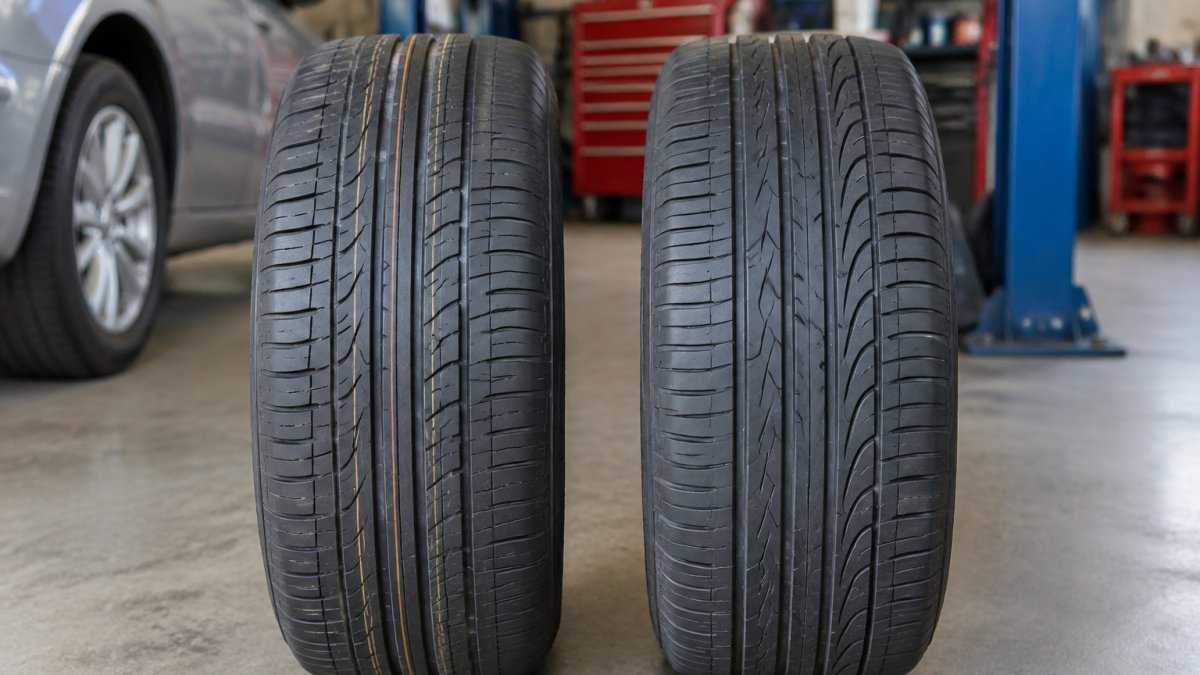
The core trade-off comes down to rubber compound and tread pattern. Performance tires use softer compounds and shallower tread blocks to stay planted. All-season tires use harder compounds and deeper grooves to last longer and handle more conditions.

Here is how the two compare at a glance:
Factor | Performance Tires | All-Season Tires |
Dry grip | High | Moderate |
Wet grip | High | Good |
Ride comfort | Firmer | Softer |
Road noise | Louder | Quieter |
Tread life | Shorter | Longer |
Cold-weather traction | Poor below freezing | Adequate |
Purchase and replacement cost | Higher | Lower |
The trade-off is real, not marketing. You are trading longevity and comfort for control.
Grip, Handling, and Braking: Where Performance Tires Earn Their Keep
Grip is where performance tires justify their price. A softer compound and stiffer sidewall keep more rubber in contact with the road, so the tire resists sliding under hard cornering and braking. On dry pavement, that shows up as sharper steering response and shorter stopping distances.
Handling and cornering feel different too. The stiffer sidewall flexes less, so the car changes direction with less body roll. Drivers who commute on winding roads or enjoy enthusiastic driving notice this immediately.
Wet-weather performance is the surprise for many. A good performance tire channels water well and holds grip in the rain, often better than a basic all-season. But watch out: grip falls off fast as temperatures drop, and worn performance tires lose wet traction quickly. Check tread depth often. Our guide on how to check tire tread depth at home walks through the coin and gauge methods.
Braking is the safety angle most buyers miss. Shorter stopping distance is the payoff, but only in warm, dry, or wet conditions. In cold weather, that advantage disappears.
Ride Comfort, Road Noise, and Daily Commuting Realities
Daily commuting exposes the downside of performance tires: a firmer ride and more road noise. Stiffer sidewalls transmit more of the road surface into the cabin. Shallower tread and aggressive patterns also hum at highway speed.
For short commutes on smooth roads, most drivers adapt within a week. For long highway miles, the drone gets old. Sedans and family cars feel it more than sport-tuned models, which are built to absorb the stiffness.
A common mistake is buying performance tires for a car with soft suspension. The result is a harsh ride with no handling benefit, because the chassis was never tuned for that grip. Match the tire to the vehicle, not just to your ambitions.
Performance Tire Tread Life: How Fast Do They Really Wear?
Performance tire tread life is shorter than all-season tread life, and that is by design. Softer rubber grips better but wears faster. Aggressive driving, hard cornering, and heavy braking speed up the wear rate further.
Treadwear grades on the sidewall give you a rough comparison. A lower treadwear number means faster wear. Expect to replace performance tires more often than all-season tires, which raises replacement frequency and total cost.
Tire longevity also depends on rotation, alignment, and inflation. A misaligned car can scrub a set of performance tires down fast. If your steering pulls or the tread wears unevenly, get an alignment check before you blame the tires.
Performance Tires in Cold Weather: When They Stop Being Safe
Cold weather is where performance tires stop being safe, and the reason is chemistry, not marketing. Summer and many performance compounds are formulated with rubber blends that stay pliable in warm temperatures. As the pavement and ambient air cool, that rubber stiffens, and a stiffer tread block conforms less to the road surface, so grip falls off.
That is why the three tire categories are not interchangeable in cold weather:
Summer performance tires are built for warm-weather grip. They are not designed for freezing temperatures, and they are not rated for snow or ice. Cold pavement alone can reduce traction before any snow falls.
All-season tires use a compound and tread pattern intended to remain flexible across a broader temperature range, including light snow. They give up some warm-weather grip to do it.
Winter tires use a softer cold-weather compound and dense siping to stay pliable in freezing temperatures and bite into snow and ice. They are the only category designed specifically for sustained cold.
A common mistake is treating "performance" as a single trait. A tire can be excellent in July and genuinely risky in January, and the difference is the compound, not the tread depth. Worn performance tires make it worse: as tread wears, wet and cold traction degrade faster, so a tire that felt fine last fall can feel sketchy on the first cold, wet morning.
Watch Out Do not rely on tread depth alone to judge cold-weather safety. A performance tire with legal tread can still lose grip in near-freezing temperatures because the compound has stiffened. If your area sees sustained cold, plan for a seasonal swap rather than pushing summer rubber through winter.
If you live where winters bring sustained cold, performance tires are not a year-round answer. The practical fix is a second set of wheels with winter or all-season tires for the cold months.
This is the limitation most buyers underestimate. A tire that feels incredible in July can feel sketchy in January. Plan for the season, not just the test drive, and match the tire to the temperatures you actually drive in.
Performance Tire Cost: Purchase Price and Total Cost of Ownership
Performance tire cost runs higher at purchase, and the total cost of ownership depends on how you drive, so it is worth pricing the whole cycle instead of just the first set. Most buyers compare sticker price per tire and stop there. That misses the three costs that actually decide whether performance tires are worth it for daily driving: how long the set lasts, how often you replace it, and whether you need a second set for winter.
Here is how to build the comparison yourself:
Purchase price per set. Price the exact size and load index your vehicle requires, not a generic size.
Expected tread life. Use the treadwear grade on the sidewall as a rough relative guide, then adjust for your driving. A lower treadwear number generally means faster wear. Aggressive driving, hard cornering, and heavy braking shorten life further, so two drivers with the same tire can see very different replacement intervals.
Replacement frequency. Divide your expected annual miles by the expected tread life to estimate how many years a set will last. A shorter-lived tire replaced more often costs more over five years even if the per-tire price looks close.
Seasonal second set. If you live where winters bring sustained cold, add the cost of a winter or all-season set and the wheels to mount them on. That is a real ownership cost, but it also extends the life of your performance set by keeping it off cold pavement.
Fuel economy. Sticky rubber and higher rolling resistance can trim fuel economy slightly. The effect is usually small, but it belongs in the math if you drive a lot of highway miles.
Maintenance. Alignment, rotation, and inflation checks protect the investment. A misaligned car can scrub a set of performance tires down fast, turning a planned replacement into an early one.
Pro Tip Build a simple five-year cost estimate: (number of sets needed × price per set) + seasonal set cost + estimated alignment and rotation costs. Compare that total, not the per-tire price, when you decide.
The smart move is to price the whole cycle, not just the first set. Ask what a set costs, how long it lasts for your driving, and whether you need winter tires too.
A Daily-Driver Decision Framework for Your Vehicle and Habits
Use this framework to decide. Answer each question honestly.
Do you drive mostly in warm, dry, or wet conditions with little snow?
Do you value steering response and braking over a soft ride?
Is your car sport-tuned or does it have firm suspension?
Can you budget for faster replacement and possibly winter tires?
Are you willing to check tread depth and alignment regularly?
If you checked most boxes, performance tires suit your daily driving. If you checked few, all-season tires are the better fit for driving needs and comfort.
Performance trade-offs are personal. There is no universal right answer, only the right answer for your climate, car, and habits.
Get Your Tires Inspected and Mounted by Certified Technicians
Choosing the right tire is only half the job. Certified tire services in Temple Hills cover expert inspection and mounting. Proper mounting, balancing, and alignment protect your investment and keep you safe. At Innovation Auto Body Mechanics & Tires, our I-CAR and ASE certified technicians handle mechanical and collision repair, and tire and alignment work. You can book tire and alignment services and get everything handled under one roof, backed by our 100% lifetime workmanship warranty and transparent pricing. Ready to decide? Get started with Innovation Auto Body Mechanics & Tires and drive on tires matched to your car and your habits.
Frequently Asked Questions
Are performance tires worth it for daily driving?
It depends on your priorities and climate. Performance tires deliver sharper steering response, more grip on dry pavement, and shorter braking distances, which matter if you drive enthusiastically or own a sporty sedan. The trade-offs are faster treadwear, higher purchase price, more road noise, and reduced cold-weather traction. If you commute mostly on dry roads and accept replacing tires more often, they can be worth it. If you want long tread life and comfort, all-season tires usually make more sense.
Do performance tires wear out faster than all-season tires?
Yes, generally. Performance tires use softer rubber compounds for grip, so their tread life is shorter than all-season tires. The wear rate depends on your driving style, alignment, rotation schedule, and road conditions. Aggressive cornering and hard acceleration accelerate wear. Check tread depth monthly and rotate according to the manufacturer's schedule to get the most life from a set.
Can you use performance tires in cold weather?
Summer performance tires lose grip as temperatures drop, and many manufacturers advise against using them below about 40°F. The compound hardens, which reduces traction and can lead to cracking if the tires are flexed in freezing conditions. If you face cold winters, switch to all-season or winter tires for the season. All-season performance tires are a compromise but still not a substitute for dedicated winter tires in snow and ice.
How much do performance tires cost compared with all-season tires?
Performance tires typically cost more per tire than all-season tires of the same size, and they wear faster, so the total cost of ownership is higher. Pricing varies by size, brand, and speed rating, so ask your tire shop for a quote based on your vehicle's specifications. Factor in mounting, balancing, alignment, and a higher replacement frequency when comparing the real cost over several years.
Comments