.png)
How to Evaluate Local Mechanical Repair Shops
Table of Contents
What Makes a Local Mechanical Repair Shop Trustworthy
Key Indicators of a Reliable MechanicHow to Verify ASE Certification OnlineWhat to Look for Beyond CertificationsWarranty Coverage and Written Guarantees
How to Verify ASE Certification Online
What to Look for Beyond Certifications
Warranty Coverage and Written Guarantees
Auto Repair Shop Red Flags You Should Never IgnorePressure Tactics and Vague CommunicationLack of Transparency in Pricing and Labor Rates
Pressure Tactics and Vague Communication
Lack of Transparency in Pricing and Labor Rates
Understanding Repair Estimates and Written QuotesWhat a Complete Estimate Should IncludeComparing Multiple EstimatesThe Post-Repair Inspection Checklist
What a Complete Estimate Should Include
Comparing Multiple Estimates
The Post-Repair Inspection Checklist
Questions to Ask Before Auto Repair Authorization
The Role of Customer Reviews and Verified Feedback
One-Stop Shops: Collision Repair, Mechanical Work, and Tire Services
Frequently Asked Questions
Last Updated: September 3, 2026
What Makes a Local Mechanical Repair Shop Trustworthy
A trustworthy local mechanical repair shop demonstrates transparency at every step: clear communication about what's wrong, why repairs are necessary, and what the work will cost before any wrench touches your engine.
The best shops explain findings in plain language, answer questions without impatience, provide written documentation, and show you the problem, whether via photo or diagnostic report.
At Innovation Auto Body Mechanics & Tires, we've built our reputation on this principle for over a decade. Trustworthiness isn't something you claim, it's something you demonstrate through consistent, honest work and transparent pricing.
Key Indicators of a Reliable Mechanic
The most common and respected credential is ASE (Automotive Service Excellence) certification, which requires hands-on experience and a rigorous exam (ase.com). Verify it yourself using official databases rather than trusting a wall certificate.
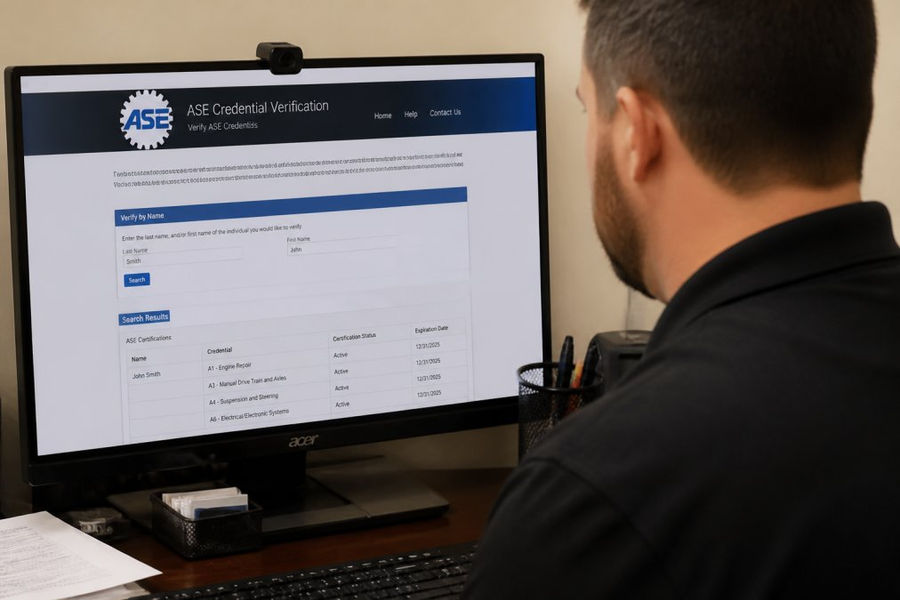
How to Verify ASE Certification Online
Visit the ASE website and use their credential verification tool by entering the technician's name and certification number, this takes less than two minutes and confirms the certification is active and current.
ASE certification requires renewal every five years (ase.com). When you verify online, you'll see which specific areas the technician is certified in, Engine Repair, Automatic Transmissions, Electrical Systems, etc. This specificity matters: a technician certified in engine repair may not be right for transmission work.
Look for manufacturer-specific certifications from Toyota, Honda, Ford, and others. These require manufacturer training and brand-specific exams. Verify through each manufacturer's official website or by asking the shop for proof.
I-CAR (Inter-Industry Conference on Auto Collision Repair) certification is critical for collision work. Verify credentials through their online registry at I-CAR.org.
What to Look for Beyond Certifications
Certifications prove technical knowledge but not management quality. Look for shops where the owner or service manager is also certified, this signals leadership understands the work and holds the team accountable.
Shop cleanliness and organization reveal operational discipline. Notice whether tools are properly stored, the workspace is orderly, and customer vehicles are clearly labeled. Pay attention to the diagnostic area: are computers and scan tools well-maintained? Is there a system for documenting findings?
Ask how long the shop has been in business and whether ownership or management has remained consistent. Longevity under consistent leadership demonstrates staying power and customer trust.
Warranty Coverage and Written Guarantees
A reliable shop stands behind its work with written warranties on parts and labor, typically ranging from 12 months to lifetime workmanship coverage (the FTC). The key is that the guarantee is in writing and clearly explained before work begins.
Ask about warranty coverage on both parts and labor. A shop confident in its work typically offers comprehensive coverage. Request the warranty in writing and keep it with your vehicle's service records.
Auto Repair Shop Red Flags You Should Never Ignore
Certain behaviors signal that a shop may not have your best interests in mind. Learning to recognize these red flags helps you avoid costly mistakes and potential safety issues.
Pressure Tactics and Vague Communication
A shop that pressures you into immediate decisions without explanation is a red flag. Most routine work can wait for you to consider your options. If a shop insists you authorize work "right now" or can't explain what's wrong, leave.
A mechanic should explain what they found, why it needs repair, and consequences of delay. If you leave confused, that's the shop's failure to communicate clearly.
Lack of Transparency in Pricing and Labor Rates
Before authorizing any work, you should have a written estimate that itemizes parts and labor. Labor rates should be disclosed upfront, not buried in fine print.
A transparent shop provides a detailed breakdown of parts (OEM or aftermarket), labor hours, and total cost. If a shop refuses a written estimate or the final bill significantly exceeds it without explanation, that's a major red flag.
Understanding Repair Estimates and Written Quotes
A written estimate lists each repair, parts involved, labor time, and total cost. It establishes clear expectations and provides a reference point for the final invoice.
What a Complete Estimate Should Include
A thorough estimate breaks down each line item separately. For example, instead of "Brake service, $450," a complete estimate reads: "Replace front brake pads (OEM Akebono brand), $85 parts, 0.5 hours labor at $80/hour = $125 labor, total $210. Replace front rotors (OEM), $140 parts, 1 hour labor at $80/hour = $80 labor, total $220. Inspect rear brakes, no charge." This level of detail shows you exactly what you're paying for and why.
The estimate should specify whether parts are OEM (original equipment manufacturer) or aftermarket. OEM parts cost more but carry manufacturer backing; aftermarket parts cost less but vary in quality. A reputable shop explains this trade-off and lets you choose.
The estimate should clearly state the hourly rate and estimated time for each task. If the final bill shows significantly more labor hours than estimated, ask for an explanation.
Comparing Multiple Estimates
Get quotes from two or three shops to understand reasonable pricing. Don't choose solely on price, a significantly lower estimate might indicate corner-cutting or inferior parts.
Ensure estimates quote the same scope of work. If one shop recommends replacing rotors and another resurfacing them, ask each to justify their recommendation. A shop that explains its approach demonstrates expertise and customer focus.
Be wary of estimates dramatically lower than others. If three shops quote $400 and one quotes $200, that's a red flag, either they've found legitimate efficiency or they plan to cut corners or upsell.
The Post-Repair Inspection Checklist
Visual Inspection (5 minutes)
Verify the repair matches the estimate. If you authorized brake pad replacement, confirm new pads are visible (ask the technician to show you if needed).
Check for fluid leaks under the vehicle. A small drip is normal immediately after work; significant pooling is not.
Inspect the work area for cleanliness. Technicians should clean up after themselves; grease and debris left behind suggests careless work.
Confirm all parts are properly fastened. Loose bolts, dangling hoses, or misaligned panels indicate incomplete work.
Functional Testing (5-10 minutes)
Start the engine and listen for unusual noises. If you authorized engine work, the engine should run smoothly without new rattles or knocks.
Test brakes by driving slowly in the parking lot. Brakes should feel firm and responsive, not spongy or grinding.
Test the air conditioning, heating, and defrost if those systems were serviced.
Check all lights, headlights, brake lights, turn signals, interior lights, if electrical work was done.
Test the power windows, locks, and other electrical features if they were part of the repair.
Documentation Review (2 minutes)
Request a copy of the work order showing what was completed, parts used, and labor hours.
Confirm the final invoice matches the estimate. If there are additional charges, ask for a detailed explanation before paying.
Verify the warranty terms are documented in writing and you have a copy.
Ask for any diagnostic reports, photos, or technical notes the shop generated during the repair.
Before Leaving the Lot
If something feels wrong, unusual noise, poor performance, or incomplete work, do not leave. Discuss your concern with the service manager immediately while the technician is still available to address it.
If you're not comfortable with the work, ask to have it re-inspected by a different technician at the shop or request authorization to take the vehicle to another shop for a second opinion (though you may be charged for this).
Keep all documentation, including the work order, invoice, warranty, and any photos or reports, in your vehicle's maintenance file.
This inspection takes 10-15 minutes and can save you hundreds of dollars by catching incomplete or substandard work before you drive away. Most reputable shops expect this level of scrutiny and welcome it as a sign that you take your vehicle seriously.
Questions to Ask Before Auto Repair Authorization
Before approving work, ask: What exactly is the problem? Why fix it now? What if I delay? OEM or aftermarket parts? How long will it take? What's your warranty? Can you show me the problem? These questions ensure you understand what you're paying for and reveal how willing the shop is to educate you. A shop that answers thoroughly and patiently demonstrates respect for your decision-making.
The Role of Customer Reviews and Verified Feedback
Customer reviews provide real-world insight into how a shop treats clients. Look for patterns rather than individual comments. Multiple mentions of communication problems or praise for transparency and fair pricing are meaningful signals.
Notice how shops respond to negative reviews. A defensive response suggests they don't take criticism seriously; a thoughtful response shows they care about customer satisfaction.
Verified reviews from platforms that confirm actual customer use carry more weight than anonymous comments. Reviews with specific details about the repair experience are more useful than generic praise or complaints.
One-Stop Shops: Collision Repair, Mechanical Work, and Tire Services
A full-service shop that handles collision repair, mechanical maintenance, and tire service saves time and provides consistent communication about your vehicle's overall health. The same team can spot potential issues more thoroughly when they understand your car's complete maintenance history.
Choosing a local mechanical repair shop requires balancing several factors: credentials, communication, pricing transparency, and customer feedback. At Innovation Auto Body Mechanics & Tires, we understand that your vehicle's safety and your peace of mind matter. Our I-CAR and ASE certified technicians provide comprehensive mechanical and collision repair with transparent pricing and a 100% lifetime workmanship warranty. Get a free estimate and experience the difference that professional expertise and honest communication make.
Evaluation Factor | What to Look For | Why It Matters |
Certifications | ASE, I-CAR credentials | Proves technical competency and ongoing education |
Communication | Clear explanations, written estimates | Protects you from surprises and hidden costs |
Warranty | Written guarantee on parts and labor | Shows confidence in workmanship |
Reviews | Verified feedback with specific details | Reveals real customer experience patterns |
Pricing Transparency | Itemized estimates before work begins | Prevents unexpected charges and disputes |
Frequently Asked Questions
How do I verify if a mechanic is ASE certified?
ASE certified mechanics display their blue ASE certification card or badge in the shop. You can verify certifications directly through the ASE website using the technician's name and certification number. Ask to see their current card before authorizing work. Certified technicians have passed rigorous exams in their specialty areas and must recertify every five years, ensuring they stay current with automotive technology and repair standards.
What are the main red flags of a bad mechanic?
Watch for shops that pressure you into repairs without a written estimate, refuse to show you the damaged parts, or quote prices verbally without documentation. Avoid mechanics who discourage second opinions, lack verifiable certifications, or keep your vehicle longer than promised without communication. Poor shop conditions, missing warranty information, and unwillingness to explain repairs in plain language are also strong warning signs that the shop prioritizes profit over customer trust.
What should I ask before authorizing repair work?
Request a written estimate that breaks down parts, labor costs, and turnaround time. Ask how the shop will handle unexpected issues and whether you'll be contacted before any additional work is performed. Inquire about warranty coverage on parts and labor, technician certifications, and whether they use original equipment manufacturer or aftermarket parts. Ask for a post-repair inspection process and confirmation that the vehicle meets factory safety standards. These questions protect you from surprise charges and ensure quality work.
How can I find a local mechanical repair shop with good customer reviews?
Check verified review platforms and the shop's website for customer feedback and ratings. Look for consistent comments about communication, turnaround time, and work quality. Verified reviews from customers who describe specific repairs carry more weight than generic praise. Ask friends and family for personal recommendations. Pay attention to how shops respond to negative reviews, professional, honest responses indicate they take customer concerns seriously and are committed to quality assurance and customer satisfaction.
Free Estimate
This article was written using GrandRanker


GOOD INFO THANK YOU FOR SHARING